


Are There Real Sustainable Alternatives to The Reformation?
Last Updated: November 2, 2026
Quick Summary
The best sustainable alternatives to The Reformation are brands that use majority lower-impact fibers like lyocell, Tencel, or linen blends and disclose where garments are made. Judge any label by fiber content, third-party certifications, and published factory information before you buy.
- Read the exact fiber percentage breakdown on the garment page, not the brand's sustainability landing page.
- The $100-$200 tier is where most shoppers find the best balance of fiber story and price.
- A $188 pant worn twice a week for three years works out to roughly $2.40 per wear.
- Secondhand, rental, and repair extend garment longevity without any new production.
- Check the inseam and return window before ordering anything online.
Table of Contents
- Why Shoppers Look for Sustainable Alternatives to The Reformation
- How to Judge Sustainable Clothing Brands Before You Buy
- Brands Like Reformation: What Defines the Style
- Reformation-Style Dresses Without the Same Supply Chain
- Affordable Sustainable Fashion: What Price Actually Buys
- Marrakech Clothing: Lower-Impact Fabrics for Polished Everyday Wear
- Secondhand, Rental, and Repair: Buying Less Beats Buying New
- Compare Fabrics, Fit, and Price Before You Commit
- Frequently Asked Questions
Why Shoppers Look for Sustainable Alternatives to The Reformation
Shoppers searching for the best sustainable alternatives to The Reformation want two things: the romantic, feminine silhouette the brand made famous, and a supply chain they can feel good about. Style and sustainability rarely arrive in the same package, a dress can look lower-impact and still be made from conventional fabric in a factory nobody can trace.
Women who love Reformation's aesthetic often want more evidence before they spend. Below, we break down how to judge a brand's real credentials, what defines the style you're after, and where to shop.
Most guides rank brands by vibe and call it sustainability. A floral midi in a "conscious" collection tells you nothing about water use, labor practices, or longevity.
How to Judge Sustainable Clothing Brands Before You Buy
Judge a brand by three things in order: fiber content, third-party certifications, and whether it publishes factory information. A brand that answers all three is worth your money; one that answers none is selling you a feeling.
Materials That Actually Lower Impact
Fiber choice is the biggest lever a brand controls. Some materials genuinely reduce pressure on land, water, and energy compared with conventional cotton and polyester. Others are marketed as green with little behind the label.
- Lyocell and TENCEL: wood-pulp fibers made in a closed-loop process that recovers most of the solvent used. Soft, breathable, and drapes well.
- Organic cotton: grown without the synthetic pesticides that conventional cotton relies on.
- Linen: flax needs little irrigation and the whole plant gets used.
Watch out: a "sustainable" tag on a garment that is mostly polyester with a trace of recycled fiber is a marketing decision, not a materials one. Read the percentage breakdown, not the badge.
Certifications, Labor, and Supply Chain Transparency
Certifications do the verifying so you don't have to. Look for recognized third-party marks covering organic content, fiber sourcing, and responsible production.
Labor practices matter just as much as fiber. A brand that names its factories, publishes an audit, or describes small-batch production gives you something to check.
A simple test: can you find out where a specific garment was cut and sewn in under two minutes on the brand's site? If not, that tells you something.
Brands Like Reformation: What Defines the Style
Brands like Reformation share a recognizable design language: feminine silhouettes, floral prints, romantic details, and dresses cut to flatter without fuss, fitted bodices, wrap fronts, puff sleeves, and midi lengths that work for occasionwear and everyday basics.
"Brands like Reformation" is really two questions. Do you want a style alternative, a similar look from any label? Or a sustainable alternative, a similar look from a brand with verifiable credentials?
Reformation-Style Dresses Without the Same Supply Chain
Most guides hand you a list of labels with a similar look and call it a day. That is a style list, not a sustainability list. The more useful exercise is to take the same romantic silhouette, fitted bodice, wrap front, puff sleeve, floral midi, and compare how brands actually build it: fiber content, certification, factory disclosure, size range, and price.
What to compare, in order
Start with fiber content on the garment page, not the brand's sustainability landing page. A romantic midi in 100% lyocell or a linen-lyocell blend has a traceable fiber story; the same silhouette in a polyester shell with a "recycled" trim does not.

The questions that do the work
- What is the exact fiber percentage, and is it certified? "Lyocell blend" is not an answer; "53% lyocell, 44% cotton, 3% spandex" is.
- Where was this specific garment cut and sewn? A named factory or region beats "ethically made" every time.
- Does the brand publish a factory list or audit? If yes, read it. If no, note the absence.
Watch out: a floral print and a soft drape can make a conventional-polyester dress read as "sustainable" in photos. Read the percentage breakdown before you fall for the print.
Where the silhouette shows up in lower-impact fabrics
The romantic dress silhouette translates well into lyocell, Tencel, and linen-lyocell blends because those fibers drape softly and hold a fitted bodice without stiff interfacing.
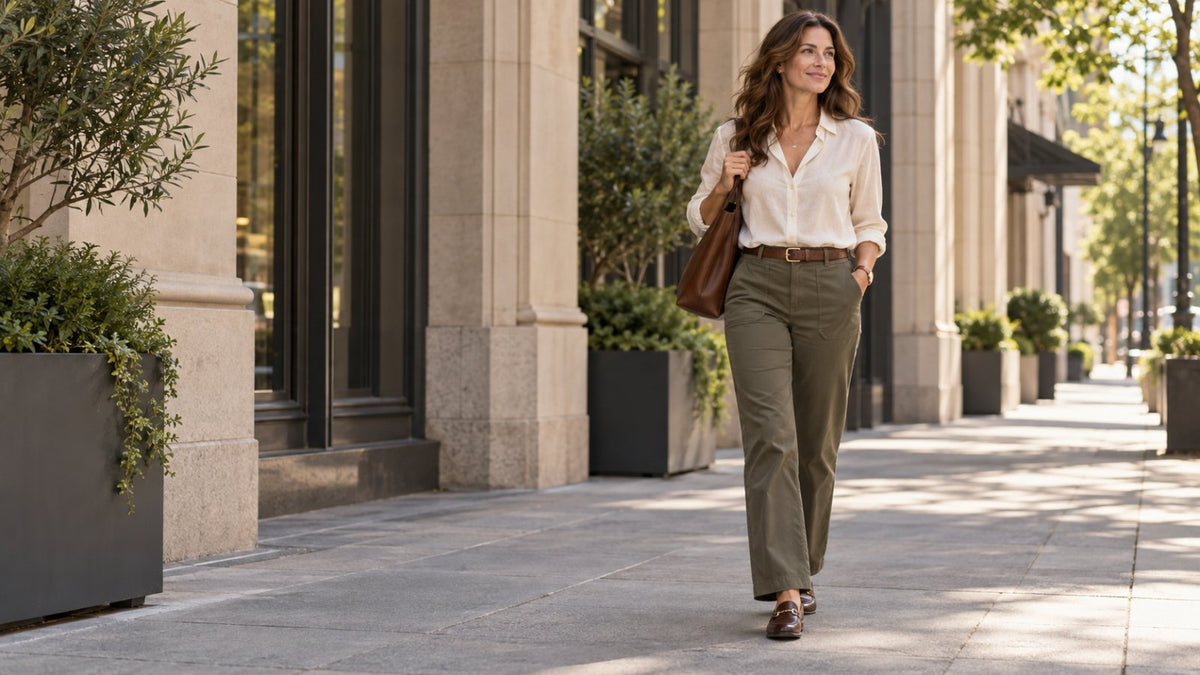
Check the size range before you commit to a print, and confirm the return window. If you want the tailored-separates version of that polished look, our Kelley Stretch Tencel Cotton wide-leg pant carries the same soft structure in a Tencel cotton blend with a cropped 25.5-inch inseam.

A note on what this section is not
This is not a ranked list of brands, because a ranked list without consistent criteria is just a style roundup. Use the five questions above on any label you are considering, and the comparison becomes yours.
Affordable Sustainable Fashion: What Price Actually Buys
Affordable sustainable fashion is a genuine contradiction. Lower-impact fibers and traceable production cost more than conventional fast-fashion inputs. What you are really buying at a higher price is durability, and durability is where the math flips.
The price tiers you will actually see
Across lower-impact labels, a few broad ranges recur. Treat these as orientation, not gospel, and always confirm on the product page.
- Under $100: usually a single lower-impact fiber blended with conventional cotton or a trace of recycled content. Read the percentage breakdown closely; this tier is where "sustainable" tags outrun the fiber.
- $100-$200: the most common range for a garment that is majority lyocell, Tencel, or linen-lyocell, with a named factory or a published certification. This is where most shoppers find the best balance of fiber story and price.
- $200-$350: heavier fabric weights, more construction detail, and often a fuller transparency page. Worth it if the garment replaces two cheaper pieces you would otherwise buy.
Cost per wear, with the arithmetic shown
The metric that matters is cost per wear. A $188 pant worn twice a week for three years works out to roughly $2.40 per wear before resale value.
Theona Stretch Tencel Cotton Straight Leg Pant →
Here is how we would evaluate any purchase:
- Estimate wears per year, honestly
- Divide price by total expected wears
- Compare that number across your options
Watch out: treating a higher price as proof of quality is the most common mistake in this category. Price signals intent, not outcome. Look for specifics, fabric weight, seam construction, how the brand describes longevity, because a $300 dress with a weak seam is a worse value than a $150 one with a reinforced one.
When the higher price is worth it, and when it is not
The higher price is worth it when the fiber is majority lower-impact and certified, the brand discloses where the garment was made, and the silhouette is one you will actually repeat. It is not worth it when the fiber is a minority blend, the transparency page is generic, or the piece duplicates something already in your closet. In that last case, the most affordable sustainable choice is the one you do not buy.
A practical comparison across garment types
Price per wear behaves differently by category. Tailored separates tend to earn their price because they are worn repeatedly across seasons. Occasionwear earns its price only if you rent it, resell it, or genuinely rewear it. Basics earn their price when the fabric holds shape through washing.
Marrakech Clothing: Lower-Impact Fabrics for Polished Everyday Wear
Marrakech Clothing builds the polished everyday wardrobe around lyocell, Tencel, linen blends, and cupro, cut into pieces designed to move with you from office to evening.
If you want the fabric story in practice, start with the Clark Stretch Linen Lyocell barrel-leg pant at $198. The Theona Stretch Tencel Cotton straight-leg pant at $188 is the more tailored option, with a 28-inch inseam and a 53% lyocell, 44% cotton, 3% spandex blend.

For a coordinated set, pair the Cortlandt Stretch Lyocell jacket with the Cedar Stretch Lyocell pant for relaxed, refined tailoring that reads polished rather than trendy.
Best for: professional women who want versatile pieces that work across a full day. Skip if: you need a specific floral dress silhouette right now, since our strength is tailored separates.
Secondhand, Rental, and Repair: Buying Less Beats Buying New
The most sustainable garment is the one already in your closet, followed closely by one that already exists.
Start with what you own. A tailor can reshape a waistband, shorten a hem, or repair a seam for a fraction of a new purchase.
If you've decided to buy less and build a smaller, more intentional wardrobe, our beginner's guide to building a sustainable capsule wardrobe walks through the process step by step.
Compare Fabrics, Fit, and Price Before You Commit
Before you commit to any purchase, line up the options on the criteria that actually decide whether a garment earns its place.
| Piece | Fabric Blend | Inseam | Price | Best For |
|---|---|---|---|---|
| Theona Straight Leg Pant | 53% lyocell, 44% cotton, 3% spandex | 28" | $188 | Tailored office wear |
| Kelley Wide-Leg Pant | 60% lyocell, 37% cotton, 3% spandex | 25.5" | $184 | Warm-weather ease |
| Clark Barrel-Leg Pant | 57% linen, 40% lyocell, 3% spandex | 26.5" | $198 | Linen without wrinkles |
| Salem Wide-Leg Pant | 57% linen, 40% lyocell, 3% spandex | 31" | $198 | Long-leg, drawstring comfort |
| Cedar Wide-Leg Pant | Lyocell blend | 26" | $180 | Relaxed utility |
| Allen Wide-Leg Pant | 58% linen, 40% lyocell, 2% spandex | 31" | $212 | High-rise polish |
Two numbers to check before you order anything online: the inseam and the size range. A 25.5-inch inseam crops at the ankle; a 31-inch inseam runs long. Neither is better, but one is right for your height.
Watch out: ordering without checking the return window is the most expensive mistake in online clothing shopping.
If you're completing a polished look, browse our Marrakech accessories to finish the outfit.
The real challenge isn't finding another brand with a romantic dress.
Frequently Asked Questions
What brands are similar to Reformation?
Brands with a similar look focus on feminine silhouettes, floral prints, and occasionwear cut in breathable fabrics. When you compare brands like Reformation, check three things: the fiber content on the care label, whether the brand publishes factory information, and the return window. A similar aesthetic is easy to copy; published material and labor details are not. Marrakech Clothing takes a different route, building polished everyday pants and jackets from lyocell, linen, and cupro blends.
Are there genuinely sustainable alternatives to The Reformation?
Yes, but sustainable alternatives fall into two groups that shoppers often confuse. Style alternatives copy the romantic, feminine look without publishing material or labor details. Sustainability alternatives publish fiber content, certifications, and factory information, and may look quite different. The strongest choice combines both: a brand that names its fabrics, explains where pieces are made, and offers construction built for repeat wear. Read the care label and the brand's transparency page before trusting any claim.
Is Reformation considered a sustainable brand?
That does not make every piece low impact. A viscose dress and an organic cotton tee carry very different footprints, and a brand-level claim does not transfer to each garment. Judge the specific item: fiber type, whether it is certified, how it is constructed, and how many wears you expect. Cost per wear is a more useful measure than a brand label.
Are there affordable alternatives to Reformation?
Affordable sustainable fashion usually means a lower price per wear, not a lower sticker price. Compare fabric weight, seam construction, and return policy alongside price. Secondhand and rental also lower cost per wear on occasionwear you would wear only a few times.
How can I tell whether a clothing brand is sustainable?
Start with the care label: Then look for named certifications and published factory lists rather than vague language like eco-friendly. Check whether the brand offers repair, resale, or take-back. Finally, assess construction: reinforced seams, functional pockets, and fabric that holds shape after washing all extend garment longevity, which matters more than any single claim.


Leave a comment
This site is protected by hCaptcha and the hCaptcha Privacy Policy and Terms of Service apply.